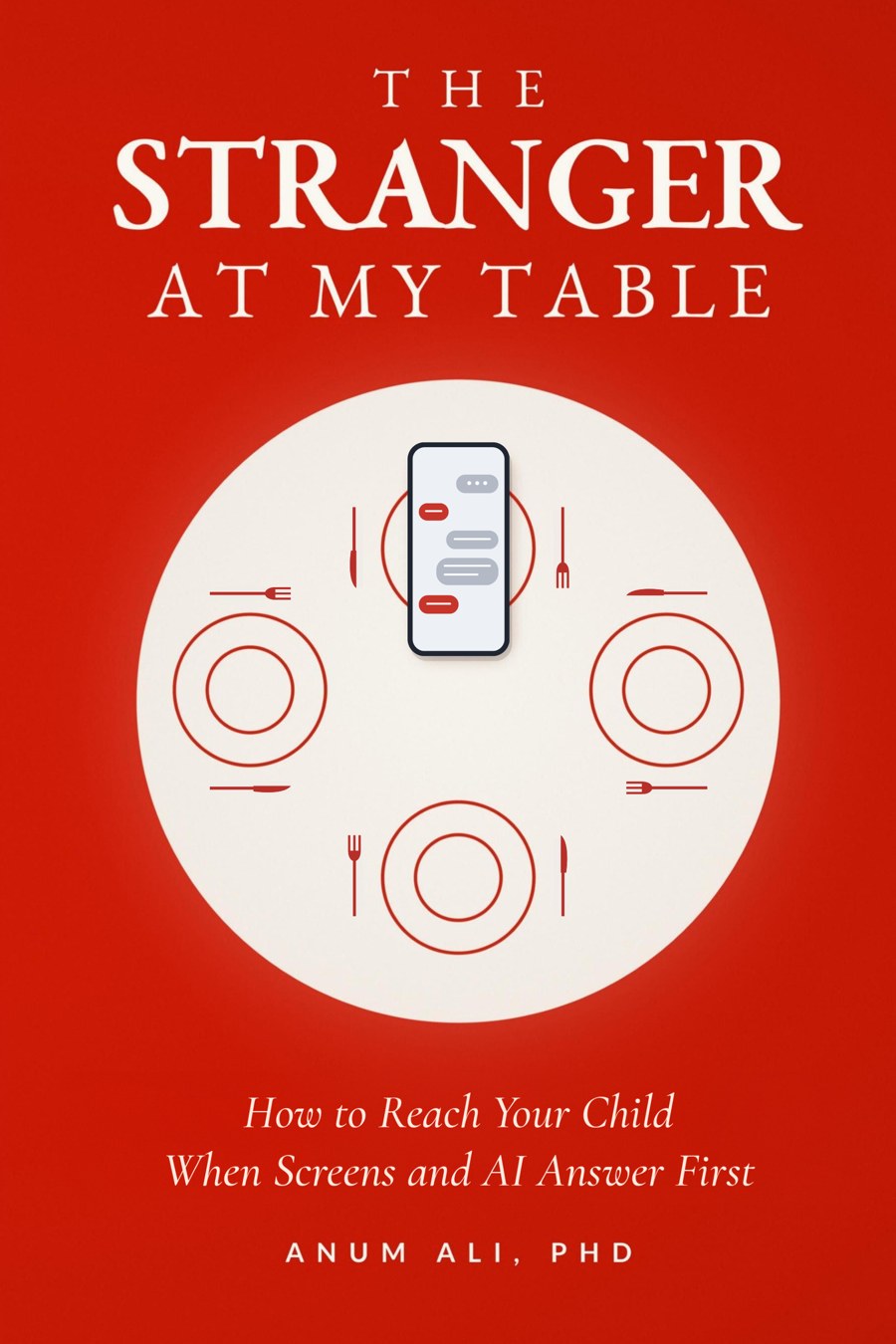
How to Become What the Algorithm Cannot Be
Dr. Anum Ali · PhD, LPC
The conversation about teenagers and technology has been dominated by fear — of addiction, of distraction, of a generation lost to their devices. That conversation is missing the most important question: what need is the algorithm meeting?
Drawing on doctoral research, clinical practice, and attachment science, The Algorithmic Child argues that adolescents don't reach for their phones because they're weak or distracted. They reach for them because the algorithm has learned to do something families and schools often fail to do: make them feel genuinely seen.
The answer isn't restriction. It's relationship.
Technology can optimize almost anything. It cannot replace the experience of being genuinely known by another person — and teenagers know the difference.
Why platforms are built to exploit the human need for attunement — and why adolescents are uniquely vulnerable to what they offer.
What happens when young people consume more emotional content than they can process — and how it shows up in the therapy room and the dinner table.
How growing up online has moved the developmental terrain — and what parents and educators need to understand about where teens actually live now.
A clinical model for understanding why adolescents bond with platforms — and how to become a more compelling attachment figure than the feed.
The case for irreplaceable human presence — and what parents, clinicians, and educators can do right now to reclaim the relationship.
Developed from Dr. Ali's doctoral research and clinical practice, HELD offers a lens for understanding what adolescents are actually seeking when they turn to technology — and how to meet those needs in ways an algorithm never can.
Adolescents need to know they have a story — that who they are today is rooted in something real and continuous.
They need relationships that survive conflict, disappointment, and time — relationships that don't disappear when things get hard.
They need to feel chosen — not because they performed well, but because someone simply believes in them.
They need adults who can see through the surface — who know the difference between who they're presenting and who they actually are.
You'll leave with a clearer understanding of what your teenager actually needs — and why the phone is often a symptom, not the problem.
A clinical framework for conceptualizing adolescent technology use through an attachment lens — grounded in research, usable in session.
Tools for understanding why banning phones alone never works — and what relationships with students need to offer instead.
Available now wherever books are sold.